


In recent years, news giants have been promising to represent minority groups fairly and accurately. But they never meant that for all minorities. There’s an obvious exception. The media works to misrepresent Jewish Americans, who make up 2% of the country. While clearing out space for the token few (very few) who support AZHM (the antizionist hate movement), they ignore virtually everyone else.
Actor and singer Jonah Platt saw this problem, and got an idea. Maybe if Jewish celebrities and others were to speak out about their experiences, people would be interested. So he created a show.
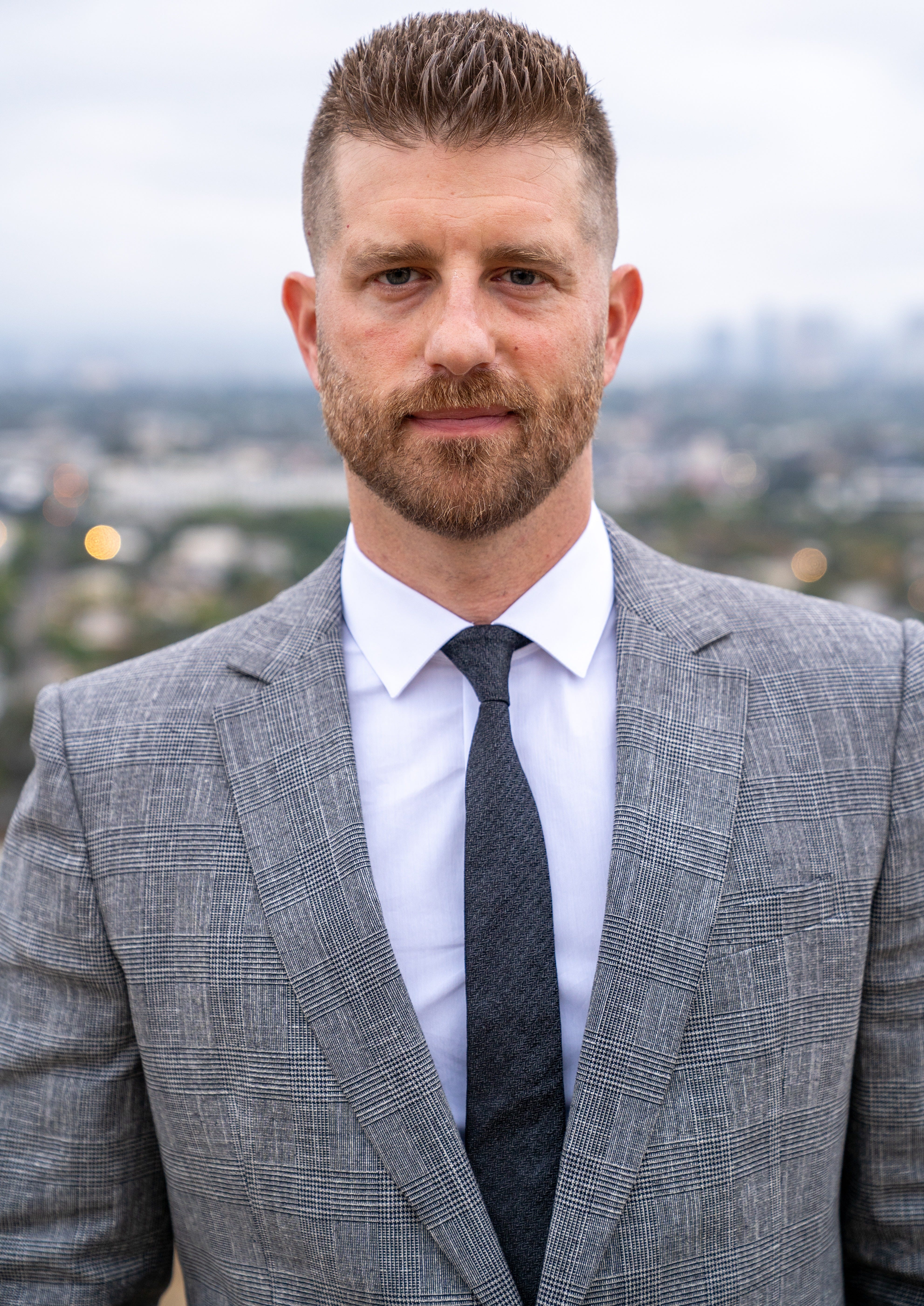
Now, after a career that included a lead role in Wicked on Broadway and an appearance in the final episode of The Office, Jonah hosts Being Jewish. He speaks with Jewish stars like Tiffany Haddish, Marlee Matlin, and Jason Alexander, as well as allies like Patricia Heaton, Cindy Crawford, and Xaviaer DuRousseau.
In this episode, you’ll hear a clip from Jewish actress Ginnifer Goodwin, who starred in Once Upon a Time, talking about how she decided to stand up to hate. (The video is below.) In the interview, Jonah and I discuss:
The silencing: Who in Hollywood’s spin machine fights to prevent Jewish stars from speaking out
The brick wall problem: Why appearing on his show requires a Harry Potter-style leap of faith
The 100-year habit: How a legacy of Hollywood’s founding never got corrected
The emotional release: Why a Broadway star broke down
and more.
Anyone can (and should!) listen for free. Paid subscribers get exclusive access to extended, edited transcripts and lots more perks. Most importantly, you help make They Stand Corrected possible.
The Interview
Jonah: Most people have never met, and will never meet, a Jew. The only thing they know is whatever 12 seconds of the news they catch, what they see in a movie or TV show, or what they hear the pundits on podcasts or whatever say. We have very few touch points.
Josh: Meanwhile, some prominent Hollywood figures like Javier Bardem, and even “members of the tribe” like Hannah Einbinder, are signing onto AZHM lies. What’s making this hatred so popular?
Jonah: It’s sort of a microcosm for the patterns we’re seeing generally. Some of the most left of the lefties work in Hollywood. But most people are in the middle, moderate, maybe not even paying attention to the issues. They’re quiet, trying to do their jobs, care about their careers.
Some are very pro-Jewish, pro-Israel, and they’re more bound together now than ever before. Then you have people on the far left who are super loud, have fallen for the same lies, and just have a bigger platform, a bigger microphone.
Josh: In one episode you have Ginnifer Goodwin, who says there was a moment when she chose not to be afraid. She was talking about the hatred she experienced when she spoke out after October 7th.
She says:
“In all of my trying to assimilate in Hollywood, and for all that I did to keep my head down, I just realized on October 10th, when these words were used with me, that I was like: No, I'm done. I don't need to apologize for doing something like reposting what my Persian friends experienced escaping Iran. My husband and I had to have a lot of talks, as I then continued to post. What if I lose my career over this? What if I become some kind of pariah because I am standing up for us? And it came down to: We would be okay if we lost the house and had to pull the kids out from school and all of these things. Because there's only one way this goes where I can sleep at night.”
Amen, Ginnifer. Jonah says many performers are trepidatious about coming on his show.
Jonah: For your listeners who are familiar with Harry Potter, it’s very much the experience of when the wizards go to Hogwarts. They have to go through Platform 9¾. It looks like a brick wall. A lot of people go, “That’s terrifying. I’m not running face first into that. I’m out of here.” The people brave enough to go through get to the other side, where they find their people. It’s magical.
I had one guest, Broadway personality Seth Rudetsky, who started crying within seconds. He was like, “I have not been able to talk about this openly, in a safe place, because my own community has turned on me.” This is what I tell folks: You are going to mean so much to so many people.
Josh: I have found that there are people inside Big Media who are glad that I’m doing what I’m doing, but tell me their bosses are afraid. I’m guessing there are people watching your show who don’t want to be punished by the people that they’re surrounded by in their communities.
Jonah: Every time I get connected to a someone through a representative, it’s almost a guarantee they’re not coming on the show. Because the representatives don’t want their client to touch anything.
Josh: The same PR folks don’t see anything controversial about being interviewed about being Black, Latino, Christian, any of these things. It’s just our existence that they instantly perceive as controversial.
Jonah: So, that’s horrible. It’s a self-fulfilling prophecy. They’re like, “It’s controversial to talk about Jewish stuff.” So then people don’t talk about Jewish stuff because they think it’s controversial. But, like, it isn’t.
Josh: Have you looked at the history of Hollywood and antisemitism?
Jonah: Hollywood was essentially created by Eastern European Jewish immigrants
Josh: who couldn’t get jobs elsewhere
Jonah: who couldn’t get jobs elsewhere, yeah, were sort of allowed to carve out this niche in what was seen as poor, gross consumption for the masses. It was like, “OK, go out in California and do your weird thing.” They wanted to be “American.” So I understand why a Schmuel Gelbfisz changed his name to Samuel Goldwyn and tried to make great “American” films. They wanted to be part of this great nation, write a new story for themselves, and have success.
The problem is that legacy of “hide your Jewishness” never got corrected. So here we are, almost 100 years later, and we’re still hiding and still trying to distance ourselves — and I think to our own detriment.
More to come in the newsletter, including how Boy George’s experience disproves the media’s “cancellation” narrative, and how Variety’s fawning interview with actress Melissa Barrera hid her rabid antisemitism. Be sure to subscribe.